SEDGWICK COUNTY —Law enforcement authorities are investigating a fatal shooting that left a man dead and have made an arrest.
Patterson photo Sedgwick Co.
Just after 4 a.m. Friday, police responded to a shooting call at a residence in the 4400 block of east Bayley in Wichita, according to officer Charley Davidson. Upon arrival, officers located shell casings and two handguns.
A short time later, 40-year-old Charles Cunningham of Wichita arrived at an area hospital with a gunshot wound. He was pronounced deceased.
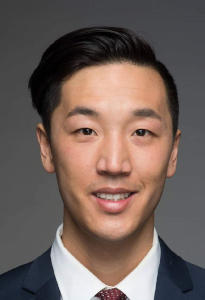
The investigation revealed that Cunningham and his 42-year-old brother went to the home on East Bayley in reference to an ongoing dispute. At the residence, Cunningham physically attacked 26-year-old Dalton Patterson and Patterson fired a shot that struck Cunningham, killing him.
This was not a random incident. The individuals involved knew each other, according to Davidson and investigators have recovered multiple guns and drugs during their investigation.
KANSAS CITY (AP) — Kansas schools rely too heavily on test scores and ignore input from teachers when weighing whether changes are needed for a student to achieve classroom success, according to a study by researchers at the state’s flagship university.
Kansas began launching the data-heavy Multi-Tiered System of Supports approach in 2007, which has been used to administer plans for student improvement. But the University of Kansas study released earlier this year calls for a balanced system that includes teacher recommendations, test scores and other metrics, KCUR-FM radio reported .
“We are losing teachers’ ability to use far more information about what they know makes for a good education for different types of kids because we’re just reducing the kids down to a number,” said Rebecca Jacobsen, an associate professor of education policy at Michigan State University.
In 2013, the Garden City Public Schools district received training for MTSS. Some teachers didn’t agree with the results from the test, but when they tried to protest, state consultants told them their input wasn’t needed.
“Good teachers are rightly saying those standardized tests are part of the story, but not all of the story,” said Don Stull, one of the study’s authors and a professor emeritus at the university. “And if we don’t try to bring all that we know . then we’re not doing the best we can for those children.”
Shortly after, the state shifted its approach to social and emotional growth. High school graduation rates were also considered alongside test scores.
“The assessment is just a tool to say do we need to look at a certain area,” said Linda Wilkerson, the co-director of MTSS for the Kansas Department of Education. “It isn’t the answer. It’s the question.”
Schools across the country are now recognizing that teachers’ judgments should not be dismissed in favor of test scores. Kansas is trying to find that balance.
“We’re coming back to a kind of middle ground,” Patricia Burch, an associate professor of education at the University of Southern California, said, “where we agree it’s important but it’s not as heavy handed.”
RENO COUNTY— Animals on a highway led to an accident just before 4a.m. Saturday in Reno County.
The sheriff’s department reported there were 8 sheep, 2 donkeys, 2 horses and a cow in the area of Kansas 96 Highway and Mills Road.
While a deputy was attempting to get the animals off the road, they ran south on K96 where a northbound vehicle driven by 55-year-old Treaza Sovine struck a horse.
Sovine complained that her left arm hurt, she had several cuts and was covered with glass, according to the sheriff’s department. EMS treated her at the scene of the crash.
She was wearing a seat belt, according to the sheriff’s department.
KANSAS CITY (AP) — A 39-year-old Kansas City man was sentenced to 91 years in prison for shooting a Missouri State Highway Patrol trooper in the leg during a confrontation at a casino.
Morris photo Clay County
Ronald Morris was sentenced Wednesday for shooting at Harrah’s Casino in North Kansas City. He pleaded guilty to assault on a law enforcement officer, armed criminal action and attempted assault on a law enforcement officer.
Clay County Prosecutor Daniel White said in May 2016, casino security reported a man with a handsaw on the roof of a car. During a confrontation with a highway patrol corporal and another trooper, Morris became combative. At some point, Morris grabbed a pistol and shot the corporal in the leg. When Morris broke away, he was shot by the other trooper.
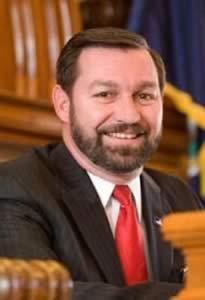
Even though it’s the offseason, Kansas Rep. Rui Xu says being a legislator is a full-time job.
A study says Kansas state lawmakers typically make $21,900 each legislative session.
Over the course of a week, on top of his part-time gig as a freelance marketer, the Democrat spends 20 to 30 hours meeting with constituents in Johnson County, going to events, working on legislation or helping city council candidates run for office.
Xu isn’t paid for that work. Like every other member of the Kansas Legislature, he only draws a salary from the state during the legislative session, from about January to May. This year, his first in office, he got $19,300.
The typical Kansas legislator makes about $21,900 during session, according to a report from the legislature’s audit division. That’s less than what lawmakers make in many other states. Oklahoma and Missouri pay more than $35,000 a year, plus living expenses.
It’s not easy to convince voters that legislators need a pay raise. But some legislators and citizens argue Kansas lawmakers’ pay isn’t enough to compensate for what they do year-round, and it could impact who runs for office and what he or she does after winning a seat.
Kansas Rep. Rui Xu.
CREDIT KANSAS HOUSE OF REPRESENTATIVES
“The makeup of our legislature … does not reflect where Kansas is as a whole,” Xu said. “A House of Representatives should be fairly representative of the population.”
How the pay breaks down
Kansas bases lawmaker pay on a daily rate while the legislature is in session: $88.66 a day, plus a per-diem allowance of $149 to cover food and housing. The state report added those numbers and multiplied them by 92 days, the average length of a session since 2000.
In reality, many lawmakers make more or less than the estimated $21,900. Some lawmakers get reimbursed for mileage, some are taxed on their per diems and some pay into their pensions — which are tied to what legislators would make if they worked for the state year-round. Plus, representatives and senators who lead their party or chair committees are paid thousands of dollars extra.
All of those factors affect the baseline salary. Data from the state employee salary website shows that some representatives made less than $10,000, while some senators made more than $40,000 in fiscal year 2018.
Age, wealth gap
Some legislators and observers say low pay discourages middle- and low-income people from running for office and instead favors wealthier, older people who are retired or have jobs that allow them to take off for several months of the year.
According to the National Conference of State Legislatures, 66% of Kansas legislators were baby boomers in 2016, compared to 29% of the state population. Only 22% of Kansas lawmakers were millennials or Gen X, even though those age groups made up 58% of the state.
In 2015, according to NCSL data, 21% of Kansas lawmakers were business owners, 11% were retired, 10% were attorneys and 7% worked in agriculture. Eighty-nine percent of lawmakers that year were white, compared to 85% of all Kansans.
At 30 years old, Xu is one of the younger lawmakers in Topeka. He and his wife are expecting their first child later this month. He’s said been planning around his extra family responsibilities, but the instability of his salary has made that harder.
“I don’t want to get rich doing this, but I don’t want to have to think about, what’s the next couple of years going to look like?” Xu said. “I don’t know what to budget for next year, I honestly don’t.”
He also doesn’t want to complain too much about a job he loves.
“There’s a lot of people out there,” he said, “who work much harder for less.”
A former Republican state representative believes voters would benefit from a wider variety of candidates to choose from.
Former Kansas Rep. Virgil Peck.
CREDIT KANSAS HOUSE OF REPRESENTATIVES
“When you get more people, you increase the pool of ability and fresh ideas that are coming into the legislature,” said Virgil Peck, who lives in rural southeast Kansas. “I believe that some legislators would feel a greater responsibility to invest more time.”
In 2014, Peck introduced a bill to increase lawmakers’ pay by about $10,000 a year and reduce the amount that they could put into their pensions. It wasn’t met with much support from his peers.
“Almost nobody was willing to publicly take a stand and say, ‘Yep, increase my pay,’” Peck said.
The bill wasn’t popular with the public, either.
“I had people call me a liar,” Peck said, “when I told them that I only earned $15,000 a year.”
Making a difference
A raise doesn’t necessarily equate to changing the legislature’s economic diversity, according to Duke University political scientist Nicholas Carnes.
In a 2016 study, Carnes and co-author Eric Hansen looked at data about state legislator salaries and the economic class of people in those offices. They found that raising the salary of those politicians didn’t make a significant impact on middle- and lower-income people joining their ranks. Instead, it encouraged more career politicians to run and win.
The biggest obstacle to running, Carnes said, is not the eventual salary, but the cost and time required for a campaign. Wealthier people tend to seek office. Others avoid it because they don’t have the time or money, he said.
“When people run, they make huge personal sacrifices,” Carnes said. “No matter what we pay our legislators, we don’t pay our candidates anything.”
To encourage more economic diversity among political candidates, Carnes suggested that organizations should conduct trainings tailored for working-class people who want to run for office.
“It’s a model that actually has a lot of potential,” he said, “and a lot of groups have used successfully.”
Ultimately, he supports raising legislators’ salaries, but for a different reason: getting paid more would encourage more dedication to the job.
“Research has generally supported the idea that if you pay a politician a higher salary, they’re more likely to behave,” he said. “They show up, they don’t miss votes, they represent their constituents’ interests.”
The national landscape
Increasing pay is a perennial proposal — and an unpopular one — in statehouses, said John Mahoney, a policy specialist at the NCSL.
“It’s always been an issue,” Mahoney said. “I don’t think it’s going to go away anytime soon.”
In 2008, then-Louisiana Gov. Bobby Jindal vetoed a bill that would have doubled the salary of the state’s lawmakers after a public outcry. Last year, New York passed the first raise for its statehouse in 20 years, also drawing criticism.
Other states determine compensation differently than Kansas, Mahoney said. Some, like Maine and Maryland, have compensation commissions that study pay on a regular basis. Others, like Alabama and South Dakota, tie legislative pay to median household income.
“It’s always around,” Mahoney said. “The question is, how do we address it in a healthy way that allows legislators and citizens to have some input?”
Editor’s note: A previous version of this story incorrectly stated the name of the Duke University political scientist. His name is Nicholas Carnes, not John.
Nomin Ujiyediin reports on criminal justice and social welfare for the Kansas News Service. Follow her on Twitter @NominUJ or email nomin (at) kcur (dot) org.
MCPHERSON COUNTY — Two people were injured in an accident just after 5p.m. Friday in McPherson County.
The Kansas Highway Patrol reported a 2013 Ford Edge driven by Carolyn M. Rhea, 64, Galva, was eastbound on Comanche Road and turned northbound on Kansas 61 highway into the path of a northbound 2013 Chevy Equinox driven by Jessica K. Boese, 34, Lehigh.
The Chevy struck the Ford on the passenger side door. The Chevy spun off the Ford and struck a 2002 Peterbilt semi that was stopped facing westbound on Comanche Road.
A private vehicle transported Rhea to the hospital in Newton. Eagle Med transported a passenger in the Ford Dorothy Nightingale, 88, Galva, to a hospital in Wichita.
Boese was not transported for treatment. The semi driver Scott R. Waltner, 56, McPherson, was not injured. The KHP did not have complete seat belt information.
SEDGWICK COUNTY —Law enforcement authorities are investigating an armed robbery and have made an arrest.
Robinson photo Sedgwick County
Just after 9p.m. Thursday police responded to an armed robbery call at Dollar General, in the 2000 Block of east 21st Street in Wichita, according to officer Charley Davidson.
Two employees at the scene told officers two suspects entered the business, put bandanas over their faces. One suspect later identified as 26-year-old Donald Robinson, Jr. pulled out a knife and grabbed the female employee around the neck and demanded money.
Robinson took the women’s cell phone and cash. The second suspect also took cash. Both fled the business on foot.
Officers were able to locate suspect in the area and made an arrest. They also recovered additional evidence from the robbery, cash and the employee’s cell phone. Police are working to locate and arrest the second suspect, according to Davidson.
TOPEKA, Kan. (AP) — A Kansas trial-court judge opposed by an influential anti-abortion group is among three finalists to fill a vacancy on the state’s highest court.
A state nominating commission on Friday named Shawnee County District Judge Evelyn Wilson as a potential appointee for Democratic Gov. Laura Kelly to consider. Kelly’s appointee will go on the court without any review by the Republican-controlled Legislature.
Kansans for Life announced its opposition this week to her candidacy, citing her husband’s political contributions to Kelly and other abortion-rights supporters. She has declined to comment, but he said she steers clear of politics.
Commission members said they were unaware of the group’s opposition.
The commission also selected Deputy Kansas Attorney General Dennis Depew and Assistant Kansas Solicitor General Steven Obermeier as finalists for Kelly to consider.
WICHITA, Kan. (AP) — A lawyer who stole more than $900,000 from an elderly client with dementia was sentenced to probation.
Larry Toomey of Wichita was given two years of probation, with an underlying sentence of 26 months, on Friday. He pleaded guilty in April to felony theft.
Toomey’s attorney, Steven Mank, told the court Toomey was entitled to the money because of a gift memo drafted by the 104-year-old client.
Prosecutors say Toomey spent nearly $962,000 from the woman’s bank accounts, including for a gambling addiction.
Under his sentence, Toomey was ordered to be evaluated for a gambling addiction and follow the recommended treatment.
Prosecutors alleged Toomey stole from the women for seven years, while she was living in a Wichita nursing home.
LAWRENCE, Kan. (AP) — District Attorney Charles Branson says his office will no longer file criminal cases for simple marijuana possession.
Branson said Thursday that Douglas County citizens should not be criminally charged when citizens in Lawrence and surrounding communities face little or no penalty in such cases. And he said he hopes the decision will allow county courts and law enforcement to focus on more serious issues.
Lawrence city officials this year reduced fines to $1 for first and second convictions for marijuana possession, for people 18 and with 32 grams or less of marijuana. The city did not change municipal court fines for drug paraphernalia possession, and additional court and diversion costs could still apply.
Possession is still illegal in most Kansas communities, and under state and federal law.