TOPEKA, Kan. — The 48th annual KSHSAA State Volleyball Tournament will welcome a new championship host site in 2018. Classes 3A and 4A will compete for trophies at the Hutchinson Sports Arena for the first time.
“The 2018-2019 school year will see a change in our school classification system, which will result in a decrease in the number of tournaments for this state event. With this change, we have explored some of the new venues and upgrades made to other facilities across the state as options for this tournament series,” Cheryl Gleason, KSHSAA Assistant Executive Director & Volleyball Administrator, said. “We are excited about the opportunity to conduct a state volleyball event at the Sports Arena in Hutchinson and the other adjustments made to our tournament locations.”
While the city of Hutchinson and Hutchinson Community College have played host to the state basketball tournament for 75 years and the state football championship at Gowans Stadium since 2006, the first state championship trophy for volleyball will be awarded in Hutchinson this fall.
“Hutchinson Community College is excited to host the 2018 KSHSAA Class 3A & 4A State Volleyball Tournaments. Our experience in hosting 3A football and 3A basketball will benefit us greatly as we prepare to host 16 of the state’s best 3A and 4A volleyball teams. The City of Hutchinson has made a commitment with the renovation of the Hutchinson Sports Arena to bring quality championship-caliber events to our community. The relationship between the KSHSAA, Hutchinson Community College and the City of Hutchinson continues to grow with the addition of this great event,” Josh Gooch, Hutchinson Community College Athletic Director, said.
“We are excited that the Kansas State High School Activities Association has chosen Hutchinson and the Sports Arena as the site for this year’s 3A & 4A State Volleyball Tournament. We can’t wait to welcome these teams to the newly renovated Sports Arena and be able to showcase one of the best volleyball facilities in the state of Kansas,” Holly Leiker, National Sports & Destination Sales Manager for Visit Hutch, said.
The Sports Arena is already host to the NJCAA National Volleyball Tournament for the next two years and the KCAC Conference Volleyball Championships.
TOPEKA, Kan. (AP) — Kansas lawmakers have advanced the first piece of a plan for complying with a Kansas Supreme Court on public school funding.
A special Senate committee on school finance approved a bill Thursday that would revise the state’s formula for distributing more than $4 billion a year to local school districts. The measure goes next to the Senate and a debate there is expected next week.
The bill’s changes are designed to make the formula fairer to poor school districts. It eliminates several provisions that the Supreme Court said favored wealthier districts.
The court ruled in October that parts of the funding formula were unfair and that the state isn’t spending enough money overall on its schools. The Senate committee’s bill does not significantly boost the state’s overall spending.
Kansas’ child welfare agency wants to hire a second full-time investigator to track down kids missing from the state’s foster system.
The Kansas Department for Children and Families building in Topeka. DCF requested additional money in its budget to find and bring back missing children in its care.
The move comes in the wake of reports last October, when the Department for Children and Families was run by Phyllis Gilmore, that the agency had lost track of three sisters who’d run away from a Tonganoxie foster home.
Since Gina Meier-Hummel took over the secretary role in December, she has received daily reports on the number of children in state care who had run away, been taken or otherwise disappeared.
DCF is taking that one step further by requesting $150,000 for its annual budget to hire a second investigator to bring back missing kids. Currently, DCF has one full-time investigator, but the money the agency is requesting would bring a second person on board, and give both a dedicated travel budget.
This is the first time DCF has asked to set aside money for travel to specifically look for runaway youth, according to DCF spokeswoman Theresa Freed. More than $90,000 of the requested amount would go toward travel for the two investigators and any other staff who might be needed to bring missing kids home.
Rep. Barbara Ballard, who brought DCF’s budget requests to the House’s budget-writing committee, said travel costs are expected to be high because travel is often last-minute and costly. When the state locates missing children, a DCF employee would usually have to catch a plane or otherwise hurry to get to the child before he or she runs or is taken elsewhere.
Some lawmakers on the House Appropriations committee balked at the requested amount, but ultimately agreed to fund a smaller amount for this year, and the full $150,000 for successive years.
The number of kids missing from care has varied since this time last year, averaging 82 kids missing per month and peaking in November, at 93 children.
BARTON COUNTY – Law enforcement authorities are investigating a suspect in connection with the disappearance and death of a 2-year-old Barton County girl.
Chaz Zachery Stephens-photo Barton Co.
Just before 4 p.m. Tuesday, the Hoisington Police department received a report of a missing Iviona Lewis. She had last been seen just before 11p.m. on Sunday in the 400 Block of Elm Street in Hoisington, according to the Barton County Sheriff’s office.
On Wednesday, authorities found the girl’s body in rural Barton County and arrested her mother’s boyfriend Chaz Stephens, 25, of Hoisington.
He is being held on a $1,000, 000 Bond for alleged second degree murder, according to the sheriff’s department.
Hoisingon police Chief Kenton Doze said the girl’s mother had been visiting her brother in Great Bend, and the delay in reporting Iviona’s disappearance stemmed from confusion over who was supposed to be caring for her.
Once the autopsy is complete formal charges will be filed by the Barton County Attorney’s office, according to the Kansas Bureau of Investigation.
—–
Iviona Lewis -Courtesy Barton County Sheriff
BARTON COUNTY – The Hoisington Police Department, the Barton County Sheriff’s Office, and the Kansas Bureau of Investigation (KBI) have found the missing girl, Iviona Lewis, age 2 of Hoisington, Kan. She has been located deceased in rural Barton county, according to a KBI media release.
Agents and local law enforcement worked through the night and made an arrest at approximately 7:30 a.m. Wednesday. Chaz Stephens, age 25, of Hoisington, acquaintance of Lewis, was arrested and booked into Barton County Jail on second degree murder. Once the autopsy is complete formal charges will be filed by the Barton County Attorney’s office.
The investigation is ongoing. No further information will be released at this time
———-
BARTON COUNTY — Law enforcement authorities are asking the public for help to locate a missing child.
Just before 4 p.m. Tuesday the Hoisington Police department received a report of a missing child. Two-year-old Iviona Lewis was last seen just before 11p.m. on Sunday in the 400 Block of Elm Street in Hoisington, according to the Barton County Sheriff’s office. She was only wearing a diaper.
Iviona has brown eyes and black hair. She is thirty-seven inches tall and weighs twenty-seven pounds. Please call 911 if you have any information.
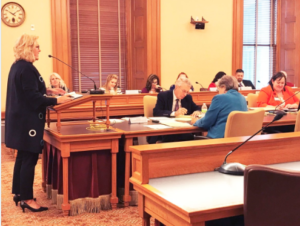
TOPEKA, Kan. (AP) — Kansas lawmakers suffering sticker shock over a report saying that improving the state’s public schools could cost an additional $2 billion a year began Monday to consider setting less ambitious educational goals than the ones that led to the big price tag.
The out-of-state consultants behind last week’s study provided new, lower estimates tied to more modest goals for improving the state’s high school graduation rate and students’ performance on standardized tests. Some Republican lawmakers who were stunned by last week’s report appeared less anxious after the consultants testified during a committee meeting Monday.
Legislators are facing a Kansas Supreme Court mandate to increase spending on public schools after it ruled in October that the current education funding isn’t sufficient under the state constitution. GOP leaders commissioned the consultants’ report, with some Republicans hoping it would show that the state already was spending close to enough money.
Instead, the report released Friday came with a potentially big price tag: a 44 percent increase in school districts’ more than $4 billion a year in operating funds. But the cost was tied to increasing the statewide graduation rate from 86 percent to 95 percent and vastly improving student scores on standardized tests, and legislative lawyers suggested the goal was to hit both targets by 2022.
The consultants, Texas A&M University professor Lori Taylor and Jason Willis, a director at the San Francisco-based nonprofit education research agency WestEd, said the state could take a decade or longer to hit those goals. Or, they said, the state could set other targets, such as a graduation rate of 90 percent or 92 percent.
“It’s time for that really broad discussion of: ‘What is it that we want to have?'” said state Sen. Molly Baumgardner, a conservative Louisburg Republican and chairwoman of a special Senate school funding committee. “What are realistic outcomes for us?”
For example, the consultants said, setting the target graduation rate at 92 percent could cost the state as little as $228 million more a year, depending on how ambitious it was about improving students’ test scores.
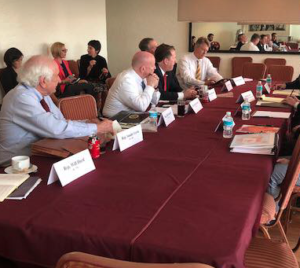
Baumgardner’s committee and a House school funding panel met together for more than two hours Monday to review the consultants’ report and question them. Senate Majority Leader Jim Denning, a conservative Kansas City-area Republican, said the big potential costs resulted from “lofty” goals and questioned whether the state should “chase” a 95 percent graduation rate.
Hitting the goal would give Kansas the highest graduation rate in the nation. State officials promised the federal government last year that it would hit the mark — but by 2030.
The state Supreme Court also is concerned with how well students perform. Four local school districts sued the state over education funding in 2010, and the justices have ruled that legislators are failing to finance a suitable education for every child. The court has said one of its biggest concerns is helping underperforming students.
“People will always talk about how much we want to do until we get the bill,” said Kansas Association of School Boards lobbyist Mark Tallman.
Senate Minority Leader Anthony Hensley, a Topeka Democrat, said as he left the meeting that he believes lawmakers could satisfy the court by phasing in a $300 million increase in funding over a few years and committing to future increases to keep up with inflation.
But Senate President Susan Wagle, a conservative Wichita Republican, still predicted after the meeting that the state could need a big tax increase to satisfy the court’s demands. She issued a statement far more pessimistic than comments even from other Republicans.
“The bottom line is that Kansans cannot afford what the court is demanding, and we cannot afford what the new study is recommending,” Wagle said.
Three militia members accused of plotting to bomb a mosque and apartment complex in southwest Kansas go on trial Tuesday in Wichita.
Ambiyo Farah said Liberal, Kansas, “is not innocent anymore.” An alleged plot to bomb a mosque and an apartment where Somali refugees live has roots in the meatpacking town. FRANK MORRIS
Their alleged plot laid bare tiny pockets of the ugliest, potentially violent, racism in a region that’s seen immigrants drawn to tough meatpacking jobs for decades.
The raw hate exposed in the alleged plan shocked some of the refugees who were targeted, reminding them of violence they fled in Somalia and sparking an exodus from one of the prairie towns.
It also prompted more people to talk with admiration of the workforce that keeps the meatpacking industry, and the region’s economy, alive. They’ve reached out to the would-be targets of domestic terrorism.
“We all give each other a chance here,” says LeVita Rohlman, who directs the Catholic Agency for Migration and Refugee Services in Garden City. “Even when things go wrong. I believe that this community stands united.”
The plot took root near Dodge City, at the easternmost point of a the Kansas meatpacking triangle formed with Liberal and Dodge City. All three Great Plains cities have for generations drawn immigrants for the smelly, dangerous work of transforming cattle into steaks and hamburger. It’s work that few U.S.-born Americans take on.
Just outside Dodge City, Patrick Stein lived in an old trailer home in Wright, Kansas, next to a rusting Quonset and a grain elevator. Neighbors say that Stein came from a respected family in town, but that he kept strange hours.
When FBI agents raided his home October 14, 2016, they found a high-powered rifle on the couch, ammunition and what appeared to be methamphetamine pipes. They also found a piece of paper with the address of an apartment complex in Garden City that authorities say was target for an act of domestic terror.
Cultures mix in the meatpacking triangle
Prosecutors say a plot to kill Muslims was discussed with an informant in this Quonset hut in Wright, Kansas. CREDIT FRANK MORRIS
In Dodge City, Garden City and Liberal, people of European descent are now in the minority. Immigrants from Africa, Asia, and Latin America, are a key part of workforce.
One of Stein’s old neighbors in Wright, Chelsea Bradville, lives in a home decorated with taxidermy and patriotic figurines. A pickup sporting a large black assault rifle decal sits out front. Bradville, like many in the meatpacking triangle, harbors an abiding respect for immigrants doing the hard work at area slaughterhouses.
“It’s very intensive labor, and there’s a lot of the community that doesn’t want to do that, you know, and they do,” says Bradville. “They’ll do the hard work, and make it.”
That thinking is pretty widespread. Old West towns like Dodge City lay claim to authentic gunslinger credibility and a history of destitute farmers toughing it out through the Dust Bowl years.
The modern story of the region speaks to a place where just about anyone, from anywhere, can make a living and gain a toehold on the American dream. Earl Watt publishes The High Plains Daily Leader and the Southwest Daily Times in Liberal.
“Opportunity may take you elsewhere, but this is a place where you get a chance to get started,” promises Watt. “If life bottoms you out, come on out, get restarted here. You’ll get that chance. We’ll get you back on your feet. That’s what defines us more than anything else.”
Southwest Kansas might have been defined something more sinister, domestic terrorism. Instead, authorities contend, a deadly scheme was foiled through the work of someone Stein believed to be a natural compatriot in an anti-Muslim crusade.
‘Only good Muslim, is a dead Muslim’
Early in 2016, an acquaintance of Stein’s contacted the FBI and became a paid confidential informant. That led him to record conversations with Stein and during meetings with two other men — Curtis Allen and Gavin Wright — who had allegedly joined his makeshift, anti-government, anti-Muslim militia.
They called themselves the Crusaders. According to the indictment, Stein seemed to relish mass murder.
“The only good Muslim is a dead Muslim,” Stein allegedly said in one recorded conversation. “If you’re a Muslim, I’m going to enjoy shooting you in the head.”
That, according to court records, included 1-year-olds. Stein regularly referred to Somalis as “cockroaches,” prosecutors contend, and compared himself to an exterminator.
The recordings allegedly chronicle the Crusaders discussing bomb types, and ordering supplies to make explosives, some of which were shipped to Gavin Wright’s modular home dealership in Liberal.
Curtis Allen was allegedly put in charge of writing a manifesto to be released after the group launched its bombing campaign. That document would fame the terror attacks as patriotic defense of the U.S. Constitution and, the three supposedly hoped, inspire other groups to wage war on Muslim immigrants. They allegedly decided to time the attack for just after the November 2016 election, so as not to hurt Donald Trump’s chances.
Their lawyers had sought to make sure juror were drawn not from more urban Wichita, but from more reliably conservative voters in the state’s southwestern corner. A judge rejected that request.
Allen had been convicted of domestic battery, and wasn’t supposed to have guns. But court documents say that when agents searched his home they found almost two dozen firearms and thousands of rounds of ammunition.
‘Why are you trying to kill me?’
The men eventually settled on 312 West Mary Street in Garden City, a closely spaced cluster of eight one-story apartment buildings. More than 100 people, primarily east African immigrants, live there. One apartment serves as a mosque.
According to court documents, the Crusaders discussed parking trucks loaded with explosives at the corners of the complex, placing bombs disguised as trash receptacles, and laying explosives in the duct work.
They spoke of shooting survivors, after leveling the buildings.
Ifrah Farah, a Somali immigrant who proudly states that she’s been in the United States four years, lives in a sparsely decorated apartment at the edge of the complex.
“I would like to ask the bad guys, ‘Why? What am I doing? Why are you trying to kill me? Am I Somali? Or, am I Muslim? What?’” she said.
The Plot Unravels
On October 11, 2016, police in Liberal arrested Allen, not long after his girlfriend called 911 to report that he had beaten her.
The next day, Stein had a meeting with an undercover FBI agent. The agent had been introduced by the FBI’s confidential source within the Crusaders group, as some kind of underworld figure, who could get him explosives. Stein had a long wish list: C-4 high explosives, machine guns, rocket-propelled grenades.
Ifrah Farah wonders why Muslims in the region would be targeted by terrorists, as federal prosecutors allege. CREDIT FRANK MORRIS
“If I could get ahold of a warthog (an A-10 Thunderbolt ground attack aircraft) or an Apache helicopter I would be after that, too,” said Stein, according to court records.
Stein and the agent discussed trading cash and methamphetamine for explosives and machine guns.
At the meeting, the FBI employee let Stein fire fully automatic weapons. Then the agent and Stein drove to 312 West Mary Street, to scope the place out.
Garden City gets it right
Two days later, FBI agents arrested Stein when he delivered them 300 pounds of ammonium nitrate fertilizer, the same raw material Timothy McVeigh used to bomb the Murrah Federal Building in Oklahoma City in 1995.
In the Oklahoma City bombing, McVeigh was inspired by “The Turner Diaries,” a novel that glorified the idea of a race war. McVeigh had hoped his act would inspire others to take up arms against the federal government.
After Stein’s arrest, the FBI called Garden City Police Chief Michael Utz. He, in turn, called local immigrants.
“When the terrorist plot was uncovered, I reached out to the president of the African Community Center, and I said, ‘I need your help,’” Utz recalled. “He said, ‘What do you need, chief?’”
Utz wanted help convening a quick meeting with African immigrant leaders to tell them about the bomb plot before it hit the news. The next day, he was back to reassure other refugees.
“We made it a point to let the community know, that the three individuals involved in this conspiracy, were in custody, that the community was safe.”
More meetings, along with public demonstrations, supporting the immigrants followed. By most accounts, they worked.
Sitting in on his couch, in that Mary Street apartment complex, Abdulkadir Mohamed said Garden City has grown closer since government exposed the alleged the bomb plot.
“The FBI, CIA, and law enforcement work together. That’s what I believe. That’s why I’m really happy. And I appreciate what they do here. Because, I’m still alive,” said Mohamed.
Mohamed is optimistic about the future of Garden City.
Abdulkadir Mohamed says Garden City has responded positively to news that authorities believe a bomb plot was aimed at Somalis. CREDIT FRANK MORRIS
But 60 miles south of Garden City, in Liberal, the disclosure of the bomb plot had the opposite effect.
“Liberal is not innocent, anymore,” said Ambiyo Farah, an 18-year-old college student in Liberal whose family fled civil war in Somalia over a decade ago. “It’s like Somalia now, you know, there’s a threat on you.”
Farah says that she’s one of the few from her native country still living in Liberal. Nearly 200 Somalis have fled the small city. That’s clear at what used to be a thriving African grocery store.
“This is the place, or it used to be the place, but now it’s a ghost town. There’s no one here,” Farah said while standing at a corner storefront in downtown Liberal. A, where a sign over the locked door reads International African Grocery.
“It used to be really beautiful,” recalls Farah, looking at the building. “Someone standing here, dressed their African clothing, just to welcome you, say hi. Give you something if you had a kid with you, but there’s no one here now.”
Down the block, ripped up carpet and insulation litter what used to be a storefront mosque.
Farah said many Somalis from Liberal moved to Garden City, joining a larger, and more secure Somali community there.
“A lot of people … have a misperception about what my religion is,” says Farah “If you don’t believe what they believe in, you’re an automatic threat. You’re here to take something, or you’re here to hurt somebody.”
WICHITA, Kan. (AP) — State officials removed foster children from a Wichita group boarding home last year after a federal agency said it suspected sexual and physical abuse, according to newly released records.
An emergency suspension order said failures at Carla’s Youth Residential Center, which housed up to 10 teenage girls at a time, created a situation that put the residents “at risk of on-going physical and emotional harm,” according to records the Kansas Department of Children of Families released last week in response to a records request. The order also said that federal officials “have reason to believe that the residents … are not in a safe living environment and have been the victims of sexual and physical abuse.”
The media sought records about the girls’ removal after the center asked for a Sedgwick County judge to review the suspension decision. In a petition filed in state court last month, the home said it operates “in a good and proper manner that does not endanger children” and its license suspension was based on “opinion accusation” rather than facts.
The state’s suspension order didn’t give details about the exact nature of the suspected abuse or when it might have occurred. But it does say that DCF’s licensing division started investigating the home on Nov. 17 after receiving a report of “potential inappropriate contact of a sexual nature” between residents that staff may have known about. That same day, all of the girls living there were removed, DCF Secretary Gina Meier-Hummel said. They have since been placed at other group homes, in foster care homes or were reintegrated into their own homes, she said.
Gina Meier-Hummel (at the podium) started her job at DCF on December 1
Meier-Hummel said she could not give additional specifics about the allegations because of the ongoing investigations. But, she said, DCF has been in contact with the U.S. Department of Health and Human Services Office of Inspector General “from the moment they got involved.”
The suspension order says the home’s executive director, Carla Hobbs, and her facilities are the subject of an ongoing federal investigation. Hobbs also ran two housing programs designed to prepare older teenage girls and young women to live on their own. Those homes were not mentioned in the suspension order.
The U.S. Department of Health and Human Services Office of Inspector General denied a media request for records, saying it could interfere with an ongoing investigation.
WICHITA, Kan. (AP) — Months before the 2016 general election, members of a Kansas militia group that prosecutors say came to be known as the “the Crusaders” met in an office to pick the targets of bombings that they hoped would inspire a wave of attacks on Muslims throughout the U.S.
Wright, Allen and Stein-photos Sedgwick Co.
In a business in the southwestern city of Liberal that sold mobile homes, the four men took precautions to avoid getting caught, putting their cellphones in a separate room and locking the door to prevent anyone from walking in on them. Three of them didn’t know that the fourth was wearing a wire as part of a federal investigation that would thwart their alleged plot.
The targeted apartment complex in Garden City -google image
Authorities say that on the day after Election Day, they hoped to detonate four car bombs outside of a mosque and an apartment complex that was home to Somali refugees who had settled in the meatpacking town of Garden City, which is about 60 miles north of Liberal along the Oklahoma border.
Jury selection begins Tuesday in the trial of Patrick Stein, Gavin Wright, and Curtis Allen on charges of conspiracy to use a weapon of mass destruction and conspiracy against civil rights. Stein, who prosecutors say was the militia’s leader, also faces an additional weapons-related charge, and Wright faces a charge of lying to the FBI. They have pleaded not guilty. If convicted of the weapon of mass destruction charge, each could be sentenced to up to life in prison.
Prosecutors have said that a militia member tipped off federal authorities after becoming alarmed by the escalating talk of violence and later agreed to wear a wire as a paid informant. The government’s case features months of profanity-laced recordings in which militia members discussed plans and referred to the Somalis as “cockroaches.”
According to prosecutors, Stein was recorded discussing the type of fuel and fertilizer bomb that Timothy McVeigh used in the 1995 Oklahoma City bombing, which killed 168 people. Stein was arrested when he delivered 300 pounds (135 kilograms) of fertilizer to undercover FBI agents to make explosives.
Prosecutors also allege that Wright and Allen made an explosive in the kitchen of Wright’s business and used it to successfully test a blasting cap, with the goal of using the cap to cause a much larger explosion at the apartment complex.
Agents also found aerial photographs in one vehicle depicting what appear to be apartment complexes marked with large x’s, as well as an aerial photo of a church and a Burmese mosque, authorities say. The group also discussed killing the apartment complex’s white owner to send a message to other landlords about renting to immigrants.
Defense attorneys either declined to discuss the case or didn’t respond to calls seeking comment. But they may have given a glimpse at a possible trial strategy when they sought to expand the prospective jury pool to include people from more rural western counties that voted heavily for Donald Trump in the 2016 election.
In that motion, they argued the case is “uniquely political” because much of the expected evidence is in reaction to the election. They contended the case will require jurors to weigh evidence regarding whether the alleged conduct amounts to criminal behavior or whether it is constitutionally protected speech.
Prosecutors — anticipating the defense will attempt to argue the men were entrapped by the informant and an undercover agent — recently asked the judge to bar the defense from presenting such arguments to jurors before first justifying it to the court. U.S. District Judge Eric Melgren has not ruled on that request.
The arrests shocked Garden City’s immigrant community, which includes many Muslims and people who work at a local Tyson Foods cattle slaughterhouse. Prosecutors are expected to call some of them to testify about the effect that the alleged plot had on them.
Ifrah Ahmed, a Somali interpreter at the plant, said her community wants the defendants to face justice, noting that if their alleged plot had succeeded, it would have been devastating. She also said the arrests had a galvanizing effect.
“We have become stronger as a community. And it showed us that we can overcome everything,” she said.
Matt Allen, Garden City’s city manager, echoed that sentiment.
“I think there are some scars left from that threat — a feeling of vulnerability — that is communitywide,” Allen said. “But in many ways it has strengthened the resolve of the community to be the best we can be to people, regardless of their backgrounds or even their beliefs.”
TOPEKA, Kan. (AP) — Political and industrial trade group leaders in Kansas are urging President Donald Trump not to scrap the North American Free Trade Agreement, fearing that doing so would hurt major Kansas export industries like agriculture and aviation.
Marshall and negotiators met in Mexico City on March 3-photo courtesy Rep. Roger Marshall
The Trump administration has been in talks with Canada and Mexico to renegotiate NAFTA, a deal Trump once called “the worst trade deal maybe ever signed anywhere” during the 2016 campaign.
Republican Kansas Gov. Jeff Colyer supports the negotiations, but is among those who wrote to Trump earlier this month in support of maintaining NAFTA, KCURreported this week.
“We want to make sure that Kansas industries continue to thrive and grow,” Colyer said. “We’re a very competitive state.”
Canada and Mexico are key destinations for farm products grown in Kansas, said Josh Roe, deputy secretary of the Kansas Department of Agriculture. He said that agriculture and aviation in 2016 accounted for more than half the dollar value of Kansas’ exports.
Some lawmakers also are concerned about tariffs on steel and aluminum recently announced by Trump. State Rep. Jim Ward, the top Democrat in the Kansas House, worries about retaliatory tariffs.
“Agriculture would be devastated by tariffs or a trade war,” Ward said.
During a recent visit to Spirit AeroSystems in Wichita, Republican U.S. Sen. Jerry Moran pointed to an airplane fuselage as an item that could be impacted by aluminum tariffs.
“The fuselage that we’re celebrating here at Spirit is 100 percent aluminum,” Moran said. “(A tariff) has a consequence in the price.”
RICE COUNTY — The governor of Kansas took time to talk with Rice County Emergency Management at its command center Thursday.
The stop by Governor Jeff Colyer was part of several across Kansas to tour the wildfires burning across the state.
Colyer says the state’s more proactive approach to fighting wildfires come from lessons learned last year:
Greg Klein of Rice County Emergency management expressed his appreciation for the state’s efforts and the ability to use four Black Hawk helicopters during the day Thursday:
Fires have been reported in the Kansas City area, Kiowa County and in Seward County in far southwest Kansas.


 The out-of-state consultants behind last week’s study provided new, lower estimates tied to more modest goals for improving the state’s high school graduation rate and students’ performance on standardized tests. Some Republican lawmakers who were stunned by last week’s report appeared less anxious after the consultants testified during a committee meeting Monday.


 The media sought records about the girls’ removal after the center asked for a Sedgwick County judge to review the suspension decision. In a petition filed in state court last month, the home said it operates “in a good and proper manner that does not endanger children” and its license suspension was based on “opinion accusation” rather than facts.